


I used to hold my views on health the way some people hold scripture. Natural was sacred. Intervention was a sign that a woman had been talked out of her knowing… or was somehow disembodied, or disconnected from natures way?
Then I gave birth.
The plan
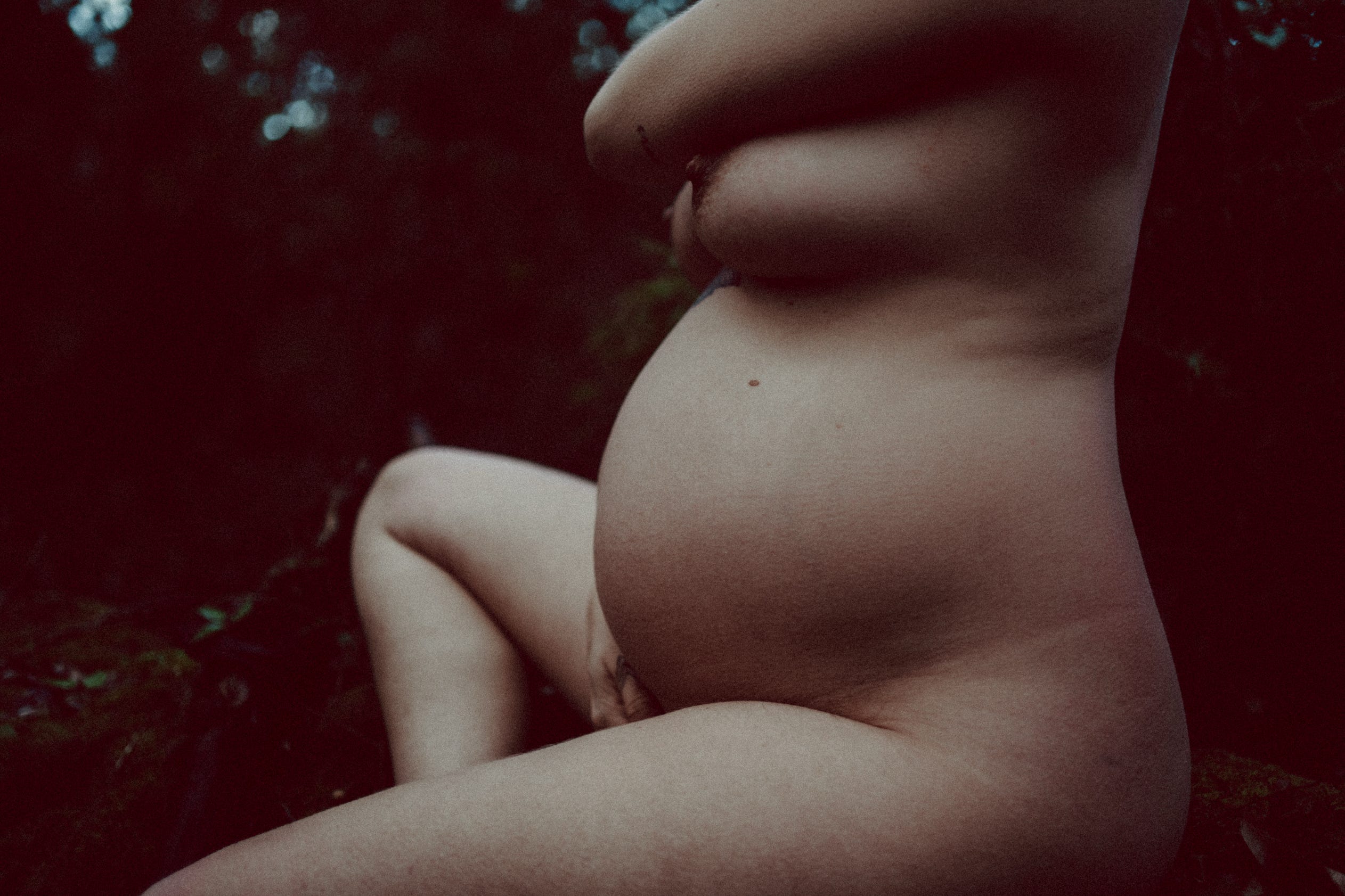
I planned a homebirth. In my mind the picture was complete: my doula beside me, my daughter's father holding the space, my midwife watching the my body unfold with grace in its own time.
None of those people were in the room in the way I had imagined. My doula was away and could not attend. It was the pandemic, and my daughter's father was refused permission to travel into the state, so he could not be there. My homebirth midwife, whom I trusted, was bound by the guidelines of the medical bodies that govern her registration. When my pregnancy reached the 42-week mark she was required to book me in for an induction.
There is no law in Australia that sets a cut-off for how long a pregnancy can run. The 42-week mark is a clinical guideline, and induction is typically offered from around 41 weeks. The decision always remains with the woman, and I had no intention of being induced. Yet my midwife's hands were tied by the system she worked inside.
The lesser of two evils
My body and my daughter were telling me she needed more time. I could feel it. I also felt the weight of the clock, and the loneliness of making this decision without my people around me. I agreed to a stretch and sweep, even though everything in me resisted interfering with my daughter's own timing. But it felt like the lesser of two evils, as I did not want to have an induction. I also did not want to birth alone. I wanted my homebirth midwife by my side and the only way she could stay with me for a home birth, was if she complied with the clinical guidelines.
After the stretch and sweep, labour arrived hard and fast. I laboured for twenty-four hours without dilating. My body gave everything, and my cervix stayed closed. My sense, then and now, is that my daughter was not ready to come. By the end I was in pure exhaustion, and I asked for an epidural.
I still did not dilate after the epidural as I was too exhausted to push and couldn’t feel my body’s cues and rhythms. My daughter began to go into distress, and I had a caesarean.
What the surrender taught me
For years I had been mostly anti medical intervention. In that hospital room I had to let support in, and it was one of the hardest things I have ever done. The sequence of my birth and the cascade of medical events happened because the medical world intervened and my body said no. And in saying this, I do not feel traumatised or disempowered by my birth. In the month leading up to my birth I had been doing EFT, visualising the various pathways my birth could take and neutralising my bodies resistance to all outcomes — including medical intervention and a hospital birth.
AND I still want a second child. I still dream of a natural birth.
I also know that accepting pain relief and medical care was the best decision I made that day. It carried my daughter and me through to the other side. It showed me something my old certainty had no room for previously: sometimes I get to choose the path of least resistance. Ease is allowed. Receiving help can be an act of wisdom. And trust me, as someone who had not even touched paracetamol or any kind of pharmaceutical medication for over a decade prior to my birth, this was a big deal.
Pro-choice, all the way down
That is why I now call myself pro-choice, in the fullest sense of the phrase. I am pro women having agency over their bodies, after generations of women having very little of it. Religious dogma told us what our bodies were for. Medicalisation told us our bodies were broken by default. Alternative-health dogma, which I once preached myself, can tell us that the only honourable way to give birth is the unmedicated one. Each of these voices takes the decision out of a woman's hands.
I want every woman to be able to ask herself what she actually wants and have the freedom to answer. For one woman that is a homebirth. For another it is an elective caesarean, an epidural at the first contraction, or a hospital with every monitor switched on. Her body, her call.
This story sits at the heart of the work I do, and I explore the wider picture in a piece I wrote with Lucinda Light for Rolling Stone UK, about the epidemic of women's health issues that go unheard and how we can begin to change it. You can read it here.
With love,
Sigourney
I love you so much xxx
This is so important. Appreciate you for sharing this part of your story 🙏