


We tend to speak of patriarchy as ideology — as something thought, upheld, and enacted through conscious choice. A set of beliefs to be examined, contested, dismantled. And there is some truth in that framing. But it is an incomplete truth. Because it assumes that the primary medium of patriarchy is the mind — that it lives in opinions, attitudes, and worldviews that can, with sufficient education and will, be revised.
What if we’ve been locating it in the wrong layer of the human being entirely?
What if the most enduring transmission of patriarchy isn’t happening in the mind at all, but in the body — before language, before reasoning, in the pre-verbal architecture of the nervous system itself? What if it is being passed not through argument or instruction, but through the felt quality of early relationship, through the subtle instruction of what is safe to feel and what must be suppressed, through the inherited tonal register of the male body across generations?
The science now supports what somatic practitioners and depth psychologists have long intuited: that the body is not a blank slate. It arrives pre-shaped — by lineage, by epigenetic imprinting, by the emotional atmosphere of the womb and the relational field of early life. If trauma can be inherited, if fear responses can be passed down through generations, then the question we must sit with is this: why not belief?
Epigenetics and the Body That Remembers
The research of Rachel Yehuda on Holocaust survivors and their descendants has fundamentally shifted our understanding of what the body inherits. Yehuda found measurable epigenetic changes — alterations in stress hormone regulation, modified gene expression — in the children of survivors who had never experienced the Holocaust themselves. The nervous system, it turns out, is a living archive. It records not only what happened to us, but what happened to those who came before us — and it passes those recordings forward, written into the very chemistry of our cells.
This work has since been extended and replicated across other populations and other traumas. What emerges consistently is the same extraordinary finding: that the physiological imprint of an experience does not necessarily end with the person who had it. It can travel — through the germline, through the epigenome, through the quality of early caregiving that is itself shaped by unresolved stress — into the bodies of children and grandchildren who never lived through the original event.
This inheritance is a predisposition — a shaping of the soil before the seed is planted. And if the soil has been conditioned for thousands of years by a particular relational arrangement — one in which women are property, vulnerability is weakness, emotional expression is danger, and dominance is the masculine birthright — then we must ask seriously: what nervous system does a boy inherit when he is born into that lineage?
What stress hormones are already slightly elevated? What threat-detection systems are already calibrated toward certain kinds of relational dynamics? What body-template is he handed, before a single word about gender has ever been spoken to him?
“The body doesn’t lie. It carries what the mind has long since learned to suppress, justify, or simply never question.”
Embodied Belief — The Tonal Body
Beliefs are not merely cognitive events. They are somatic states — tonal, textural, felt in the tissues before they are articulated in thought. A belief like “I am owed” or “her autonomy is a threat to mine” doesn’t only live as a thought. It organises the body: the set of the jaw, the bracing in the chest, the quality of the gaze, the chronic readiness to dominate or defend. It shapes breath, posture, the way a man enters a room, the way he responds when he does not get what he expects.
Through mirroring, attachment patterning, and nervous system co-regulation, boys do not just inherit ideas about gender — they inherit the body-felt texture of those ideas. They inherit the muscular tension of a father who never learned to be wrong. The controlled stillness of a grandfather for whom emotion was a private catastrophe. The particular flavour of danger that lives in proximity to female feeling, female desire, female refusal.
Watch a young boy absorb the relational dynamic between his parents. Watch him register how emotion is handled, how women are spoken about, how his own softness is received. Watch what happens in his body when he cries and is told to stop. When he reaches for tenderness and is met with correction. When he learns, slowly, that certain parts of himself are not welcome here.
He is not merely observing. He is entraining. His nervous system is taking notes in the only language it knows: tension and release, safety and threat, expansion and collapse. And those notes become the ground tone of his relational life — the felt sense of what intimacy means, what women mean, what he is permitted to need and what he must never show.
This is how patriarchy becomes somatic. Not through a single moment of instruction, but through the accumulated relational weather of a childhood — ten thousand micro-moments that together compose a body-belief about what it means to be a man in relation to a woman.
The Shadow in the Body — A Jungian Frame
Carl Jung understood the shadow not as something we choose to carry, but as something we are forced to exile. The parts of the self that cannot be integrated — that are too vulnerable, too tender, too complex for the psychological container we inherit — are pushed underground. They do not disappear. They go into the body. They organise in the unconscious. And they return, with interest, in our behaviour toward others.
For boys raised within patriarchal systems, the exiled material is enormous. The full range of emotional aliveness — grief, fear, longing, tenderness, the desire to be held, the capacity to be moved — is systematically split off and disowned. Not because boys do not feel these things, but because they are taught, in the most visceral and embodied ways, that feeling them is incompatible with being a man.
What gets projected outward — onto women, onto any other who carries the disowned softness — is the shadow of that original exile. The contempt for female vulnerability is often, at its root, a contempt for one’s own. The need to control is often a defence against the terror of one’s own uncontrollable interiority. The rage at female autonomy can carry, beneath it, the grief of a boy who was never autonomous in relation to his own emotional life.
This is not to render male violence as merely a psychological puzzle to be sympathetically decoded. It is to trace the full architecture of a pattern — because architecture, unlike character, can be rebuilt.
The First Wound — Severance from the Interior
What patriarchy does, before it produces a man who harms others (and in this case, we are talking explicitly about abuse towards women), is produce a boy who has been harmed. The particular wound is a severance — from emotional aliveness, from vulnerability, from the full spectrum of interior experience. Bell hooks, in The Will to Change, argues with devastating clarity that patriarchy’s first violence is done to boys: the demand that they excise tenderness, that they perform imperviousness, that they learn to equate their worth with control and their safety with the suppression of need.
This is the wound that is usually not directly named as a wound. It presents as strength. It is rewarded, celebrated, inducted. The boy who does not cry at the funeral, who does not flinch at the injury, who learns to laugh at his own longing — he is told he is becoming a man. What he is actually becoming is someone who has learned to live at a great distance from himself.
The abuse that later emerges toward women is, in many cases, downstream of this original dissociation. The boy who was never permitted to be held in his grief becomes the man who cannot tolerate it in another. The boy who learned that his interior was shameful becomes the man who must manage, diminish, or escape the interiority of those close to him. The dominance outward is often a misdirected search for what was lost inward — an attempt to master in the relational field what cannot be faced in ones inner world.
The Transmission We Don’t Talk About
There is one more dimension to this that we rarely point out directly: the role of the mother, not as cause of the wound, but as the first mirror. I wrote a whole post about this recently — it is called Motherless — you can read it here.
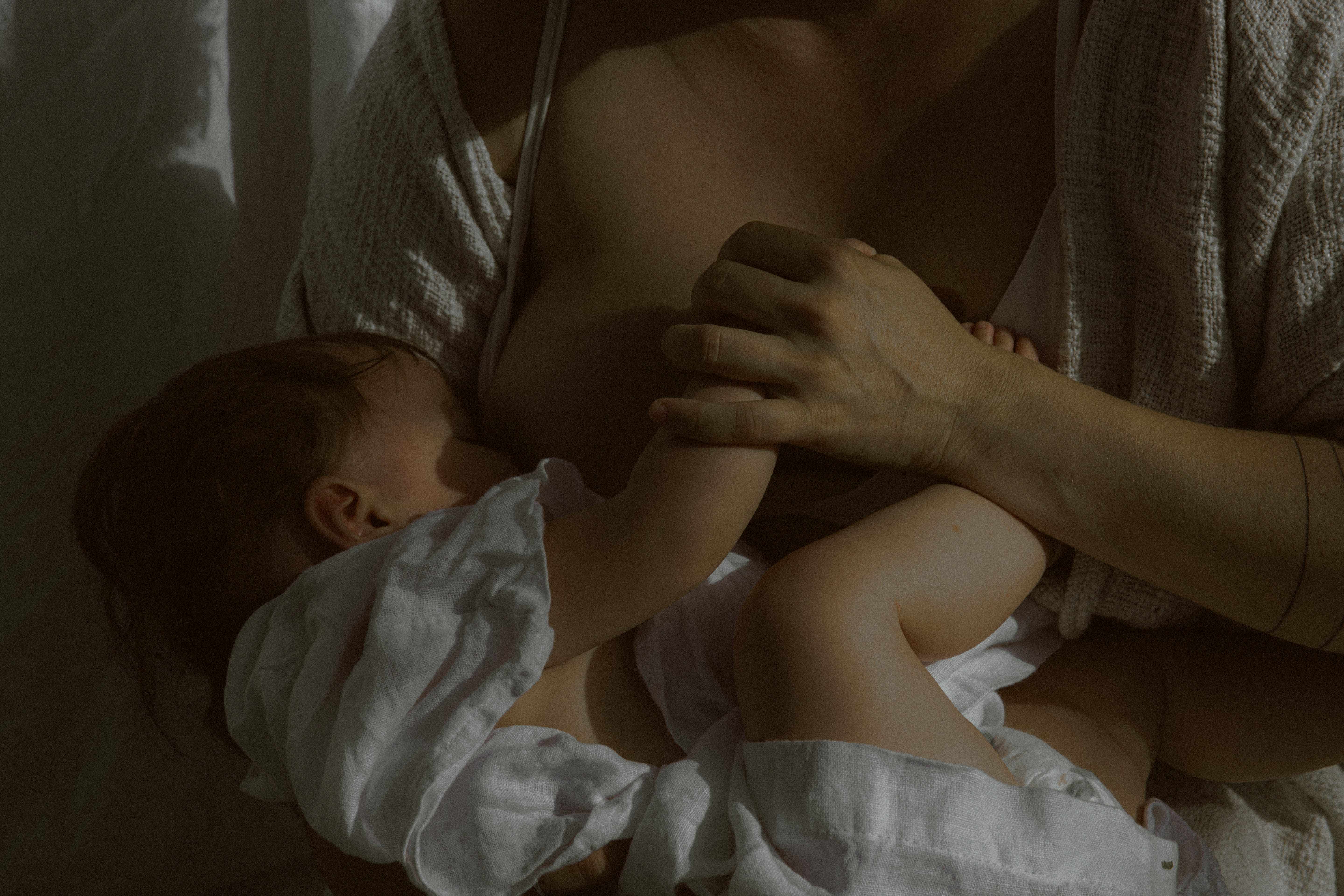
Boys learn something crucial in their earliest relationship with their mothers — or with whoever holds the primary caregiving role. They learn whether emotional need is safe. Whether closeness leads to engulfment or to genuine meeting. Whether the feminine is a force to be merged with, feared, or eventually managed. This learning is entirely pre-cognitive. It happens in the body and in the quality of being held or not held, seen or not seen.
When those early experiences are marked by unresolved anxiety, by mothers who could not be fully present because their own nervous systems were shaped by the same patriarchal inheritance — by generations of women who learned to contract, to suppress, to make themselves small — then the transmission continues through the mother-line too. Not as blame. As biology meeting biography, in the place where the two cannot be separated.
What this tells us is that the healing of this pattern is not only men’s work. It is collective work. It requires that we take seriously the intergenerational nature of what has been passed down — in both directions, through both lineages — and commit to interrupting that transmission at every level we are able to reach.
Inheritance Is Not Destiny
Here is where the framework becomes generative rather than merely diagnostic. The same neuroplasticity that encodes the wound encodes the healing. Epigenetic changes are not permanent inscriptions — they are responsive, living, capable of modification in the presence of new relational experience. The body that learned one way of being in the world can, with the right conditions, learn another.
Secure attachment experiences, somatic work, depth psychological inquiry, conscious masculine initiation — these are not merely therapeutic interventions — they create new neural pathways. They alter gene expression. They rewrite the template at the level where the template was first composed: the body, in relationship.
This is why somatic work is not supplementary to the project of addressing male violence and patriarchal conditioning. It is central to it. You cannot think your way out of a body-belief. You cannot cognitively override a pattern that was never cognitive to begin with. The re-patterning must happen where the original patterning happened — in the felt experience of the body, in the quality of relational contact, in the slow accumulation of new experiences of what it is safe to feel, what is safe to need, what it means to be held in one’s full humanity rather than required to perform an impoverished fragment of it.
“The question is not only what did he do — but where does this pattern live in his body, and what does it need in order to complete?”
What this asks of us — practitioners, partners, mothers, fathers, communities — is a willingness to hold two truths simultaneously: that the harm caused by men conditioned in patriarchy is real, serious, and must be named clearly — and that the site of transformation is the body, not merely the belief system. These truths do not cancel each other. They require each other.
A Different Kind of Accountability
True accountability requires understanding the full internal structure and layout of a behaviour — its roots, its medium, its transmission. Because a pattern that is only condemned, without being understood, tends to be driven further underground, where it becomes more dangerous, not less.
The deeper work — the work that actually changes things — is helping men find their way back to the places they were exiled from in boyhood. Back to the grief they were not permitted to feel. Back to the tenderness they learned to armour over. Back to the parts of themselves they split off in order to survive a world that told them wholeness was weakness.
When a man can feel his own fear without needing to manage it through dominance, the dynamic shifts. When he can be present to another’s pain without needing to fix, dismiss, or escape it, the dynamic shifts. When the body is no longer organised around the suppression of its own aliveness, what emerges in relationship is not control — it is contact.
This is what is at stake. Not just the safety of women — though that is urgent and non-negotiable — but the recovery of a wholeness that patriarchy has cost everyone. Men and women alike are living in the aftermath of a very long severance. The nervous system has been carrying this message across fathers, grandfathers, lineages of silenced boys, for a very long time.
It is time to listen differently. To go below the ideology, below the argument, below the carefully maintained surface — and meet what is actually living in the body.
That is where the wound is. That is where the healing begins.
Sigourney Belle Weldon is a senior neurological and womens health physiotherapist, medical intuitive, and founder of SOMAMYSTICA® — a global practitioner training body with over 10,000 trained practitioners. She writes at the intersection of clinical biophysics, esoteric medicine, and depth psychology. Her work integrates somatic trauma resolution, Jungian frameworks, and Eastern medicine lineages into a coherent map for human transformation.
YES! I had JUST read a similar article yesterday on the impact of patriarchy on the female body. I immediately went to ChatGPT to write one that relates to the boy/male body. Your writing is MUCH better! Thank you sooo much for this! This is exactly why I love working hands-on with men (and women! As you also shared, it is the relational field where the healing, re-patterning and rewiring can happen!). My "marketing advisers" have always disliked my focus on nervous system, attachment, and developmental neuroscience. I have always had a hard time getting across to people what I do. This very much speaks to WHY I do what I do! And always via DIRECT-EXPERIENCE learning and WHOLE body hands-on work! Even though I am a "Sex+Intimacy Coach/Sexological Bodyworker", we do not focus on "s3x"....we focus on patterns and moment-to-moment mapping and tracking. Thank you for all your wonderful work and writing! I am always looking forward to what will come out next!