


There is a question I often see floating around on the interweb, sometimes outright and more often in the lift of an eyebrow. From one side it sounds like this: how can you call yourself anti-patriarchal when you so clearly adore men? From the other side it arrives inverted: how can you call yourself a feminine woman and still talk about patriarchy?
Both questions assume a side and that we must make a choice. Both assume a woman is permitted one coherent position, cleanly stated, easily filed. I am tired of the filing system. My body has never once agreed to it.
So let me say it plainly. I am anti-patriarchal. I am a deeply feminine woman. I love men, their bodies, their presence, their humour — and as a result, I have incredibly supportive men in my life. Men always offer to lift my suitcases down on the plane and open doors for me. They do this, because they feel my feminine magnetism, which comes from my adoration of the men.
These three truths live in me without contradiction, and the fact that so many people experience them as contradictory tells us something important about how thoroughly the system has colonised our imagination.
Patriarchy is a system. Men are people.
Patriarchy is an architectural system. It decides whose body is property, whose testimony is believed, whose labour is invisible, who inherits and who serves. It lives in law, in medicine, in theology — it proliferates society and our own personal basements. Men are born into this architecture exactly as women are. They did not draw up its plans.
Many men bleed from it. The six-year-old boy told to stop crying becomes the forty-year-old man who cannot name a single feeling in his body, who reaches for alcohol or rage or work because the language of grief was confiscated from him in childhood. That is patriarchy too, carving its wound into him. When I stand against the system, I am also standing for him.
To collapse men into patriarchy hands the system a victory it never earned. It makes the architecture invisible by giving it a face, and then we spend our energy fighting faces while the walls stay standing.
Femininity was stolen and handed back as a costume
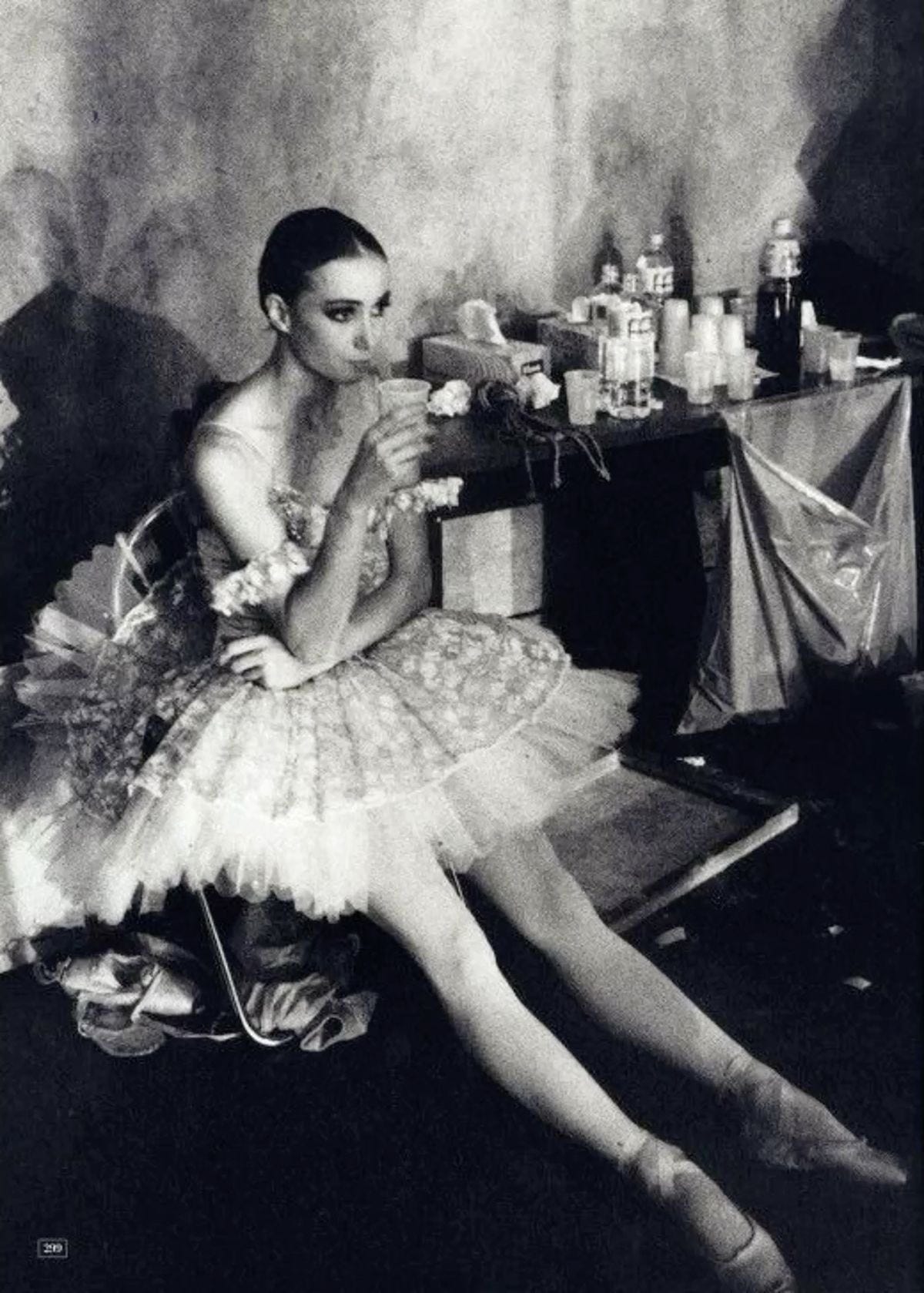
The femininity patriarchy offers women is a narrow and pretty thing. It looks like compliance, smallness, agreeableness, beauty performed for approval, and a softness that exists primarily for someone else's comfort. Many women rightly rejected that costume, and in rejecting it some of us threw away femininity altogether, because we had never been shown the original.
The original form of femininity is vast. It is the receptivity that can hold an entire life in the womb. It is the mother who would tear down a building for her child. It is Kali with her necklace of skulls and the Dakini laughing in the charnel ground. It is the wild intelligence of the body that knows before the mind does. Feminine power includes softness, and it includes fire, rage, discernment and an unshakeable boundary.
When I claim femininity, I claim the whole spectrum. I claim the silk and the sword. A woman who cooks with love, dresses for pleasure and adores being held can also stand at a podium and name the systems that harm women, and she does both from the same well.
Loving men is a radical act
I love men. I love the way a good man's attention lands, steady and warm. I love polarity, that charged field between the masculine and the feminine where so much creativity and eros lives. I love being met by strength that protects without caging.
Loving men in a patriarchal world asks something of us. It asks us to love them enough to expect more, to want their liberation alongside our own, and to refuse to accept cruelty or emotional absence as the price of devotion. Desire for a man who has done his inner work is a feminine longing. It is also a political one. Every man who learns to feel, to repair, to hold power without domination, is a crack in the empire's foundation. I wrote about this recently in my latest book release, When Eros Overthrows an Empire: A Reckoning with Desire, Shadow and The Collapse of False Power
Why we keep collapsing into black and white
The binary exists for understandable reasons. Movements formed under threat need hard edges to survive, and early feminism had to be fierce and uncompromising simply to secure women the vote, the bank account and the right to refuse. On the other side, the current "traditional femininity" wave offers exhausted women a kind of rest, a promise that they can put down the impossible load of doing everything.
Both camps offer relief from complexity. Complexity can be tiring. Paradox asks more of the nervous system than certainty does.
In developmental psychology, the capacity to hold two seemingly opposing truths is something that develops later in life as we expand our consciousness. It belongs to a more integrated stage of consciousness, one that can see the gifts of each earlier position without being captured by any of them. I believe many women are arriving at that stage now, and we are finding that the old categories pinch.
The body already knows how to do this
As a physiotherapist I learned early that the spine and the soft tissue work together. The spine gives structure. The fascia, the muscle and the organs give movement, sensation and life. A body with only spine is rigid. A body with only softness collapses. Health lives in their relationship.
The nervous system teaches the same lesson. In a regulated state, we can be open and protected at the same time, warm in the belly and clear at the edges. A woman can be soft in her pelvis and have a spine of iron. Those two capacities strengthen each other.
This is the template I return to. My softness is resourced by my boundaries. My love for men is made safer by my clarity about the system. My politics are made kinder by my femininity.
So, yes
I can light candles for my lover and still write the essay that names what the empire has done to our grandmothers. I can wear the dress, take his arm, delight in being protected, and in the same breath refuse every structure that would make me smaller.
Both are true. The woman who holds them together is whole, and wholeness has always been the thing the empire fears most.
I am tired of the black and white. Aren’t you?
Beautiful read. Feminity? Is that a word we can leave behind with the patriarchal categorisation? Then we can revel in the joy of being female and femaleness